
Is Printer Ink Toxic? How to Protect Your Skin from Harm
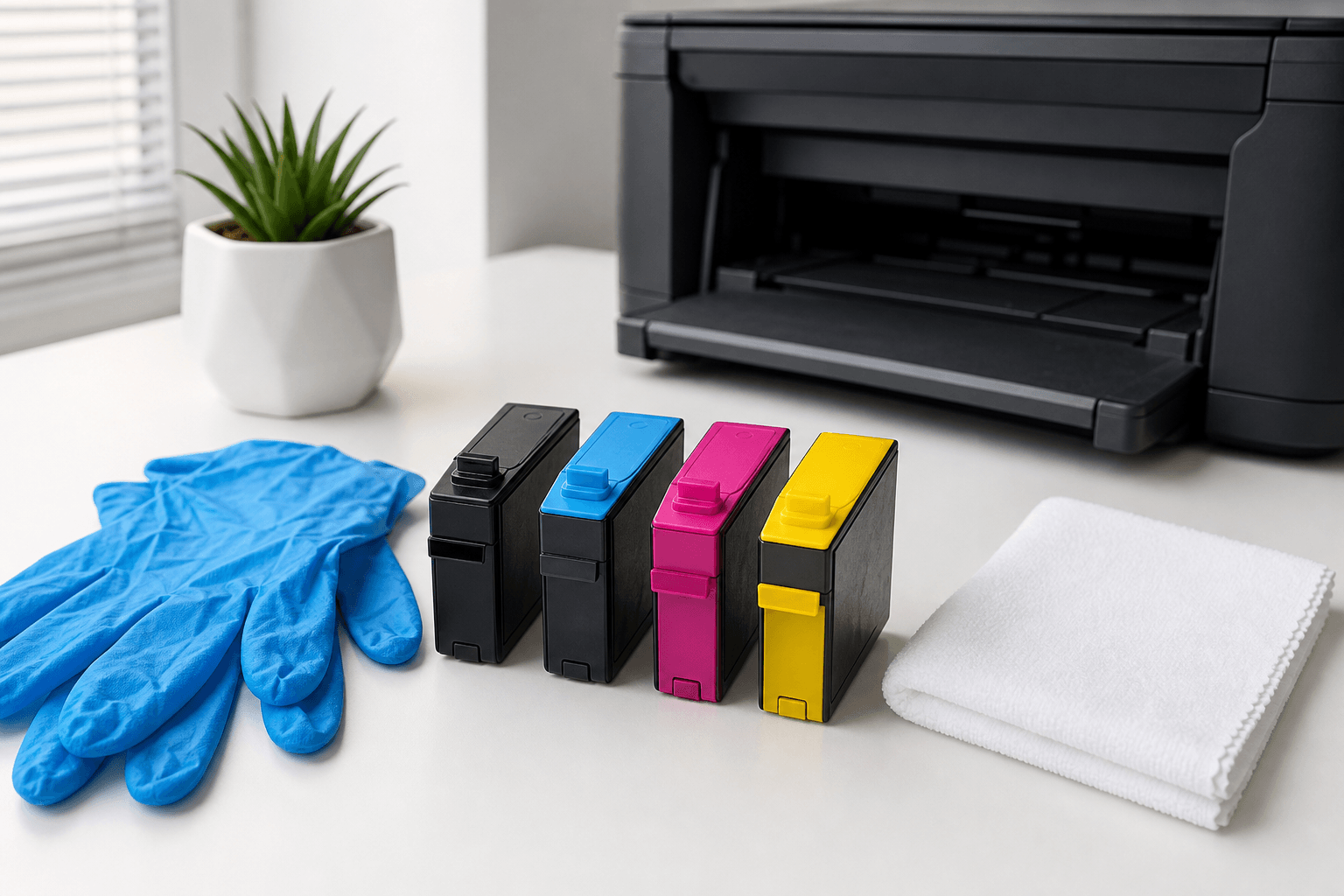
Is printer ink toxic? When the topic of printer ink comes to mind, health and safety are probably low on the list of concerns. Cost, availability, and print yield usually come first.
Still, it is reasonable to wonder whether ink is poisonous. Most printer ink and toner products are made to meet industry safety standards, but formulations vary by brand and product. It helps to know what is in the cartridge, handle it carefully, and follow the manufacturer's safety instructions.
If ink gets on your hands or clothing, see our guide to removing printer ink from skin and fabric.
What's in Printer Ink?
Printer ink formulations vary, but they commonly contain a liquid carrier, colorants, and additives that control drying, flow, stability, and how well the ink adheres to paper. Depending on the product, the carrier may include water, glycols, glycol ethers, or alcohols. Dyes and pigments create the color.
The best source for a specific cartridge is the manufacturer's Safety Data Sheet (SDS). It identifies the ingredients that require disclosure and provides handling, first-aid, storage, and disposal guidance.
Is Printer Ink Edible?
No. Printer ink is not food and should not be swallowed. The risk depends on the product, its ingredients, and the amount involved. Many common ink formulations have relatively low acute toxicity, but swallowing ink can still cause irritation or an upset stomach.
Do not rely on a one-size-fits-all home remedy. If someone swallows printer ink, rinse the mouth and contact Poison Control or a medical professional for advice based on the exact product and exposure. Keep the cartridge or packaging nearby so its ingredients can be identified.
Is Printer Ink Harmful to Pets?
Keep ink cartridges away from cats, dogs, and other pets. Some inks may contain glycols, and formulations differ. The ASPCA notes that ethylene glycol can be found in some printer and pen inks and that even a small exposure can be dangerous to pets.
If a pet bites a cartridge or may have swallowed ink, contact a veterinarian immediately. Bring the cartridge, package, or product information with you. The ASPCA's guidance on ethylene glycol and pets explains why prompt treatment matters.
What About Toner?
Laser printers use toner, a fine powder that is fused onto paper with heat. Toner formulas typically contain polymer resin, pigments, and other additives.
Normal office use is generally low exposure, but loose toner can irritate the eyes and respiratory system. Avoid breathing toner dust and do not use a household vacuum on a large spill, since it can spread fine particles through the air. Follow the printer manufacturer's cleanup instructions and consult the cartridge SDS.
Some black toner uses carbon black as a pigment. NIOSH lists inhalation and eye contact as exposure routes for carbon black and sets occupational exposure limits. Its guidance distinguishes ordinary carbon black from carbon black containing certain polycyclic aromatic hydrocarbons. This is more precise than treating every toner cartridge as a cancer hazard.
Play It Safe
Handle ink and toner cartridges gently and follow the instructions supplied with the printer. If a cartridge is damaged or leaking, avoid direct contact with its contents.
- Wear disposable gloves when cleaning a leak or replacing a damaged cartridge.
- Keep ink and toner away from your eyes, mouth, children, and pets.
- Wash exposed skin with soap and water.
- Use only the cleanup method recommended by the printer manufacturer.
- Read the cartridge Safety Data Sheet when you need product-specific guidance.
Buying sealed, correctly labeled cartridges from a reliable source also makes it easier to identify the product and find the right safety information.
The High Cost of Ink
Replacing ink is often the most expensive part of owning an inkjet printer. Printers may be sold at relatively low prices while replacement cartridges account for much of the long-term cost.
Before buying a printer, compare the price and estimated yield of its cartridges. A printer with a higher purchase price can be less expensive to operate if its replacement ink lasts longer.
How Printer Ink Is Made
Printer ink is made by combining a carrier with dyes or pigments and carefully selected additives. Manufacturers control properties such as color consistency, viscosity, drying time, surface tension, resistance to bacteria, and adhesion to paper.
Inkjet ink is engineered to pass through extremely small printhead nozzles without clogging. That requires tighter control than ordinary paint or many commercial printing inks.
Getting More From Your Ink Cartridges
Many inkjet printers use separate cyan, magenta, yellow, and black cartridges. Separate cartridges can reduce waste because you replace only the color that has run out instead of discarding an entire tri-color cartridge.
These habits can help extend the useful life of your ink:
- Print periodically so the printhead does not sit unused for long periods.
- Use draft or grayscale mode when high-quality color is unnecessary.
- Choose an ink-saving font for suitable documents.
- Store unopened cartridges according to the manufacturer's directions.
The video below from The Printing Ink Company shows how commercial printing ink is produced from raw materials. Commercial press ink is not identical to inkjet printer ink, but the process offers a useful look at color formulation and quality control.
0 comments
No comments yet.