
Print and Direct Mail Statistics 2026
![Surprising Print Advertising and Direct Mail Statistics 2022 [Huge Response Rate]](https://strapi.cash4toners.com/uploads/print_advertising_and_direct_mail_statistics_ec87348d_5119b7dafe.jpeg)
Print advertising is not where broad ad spend is growing fastest, but direct mail is still a large, measurable U.S. channel. USPS reported 56.8 billion Marketing Mail pieces in FY 2025, and direct-mail benchmarks still show strong performance when campaigns use good lists, clear offers, and reliable tracking.
The short version: print works best when it is targeted, personalized, and tied to a measurable digital action. A generic postcard blast is easy to waste. A segmented campaign with QR codes, personalized URLs, coupons, call tracking, and a clean house list can still compete with digital channels.
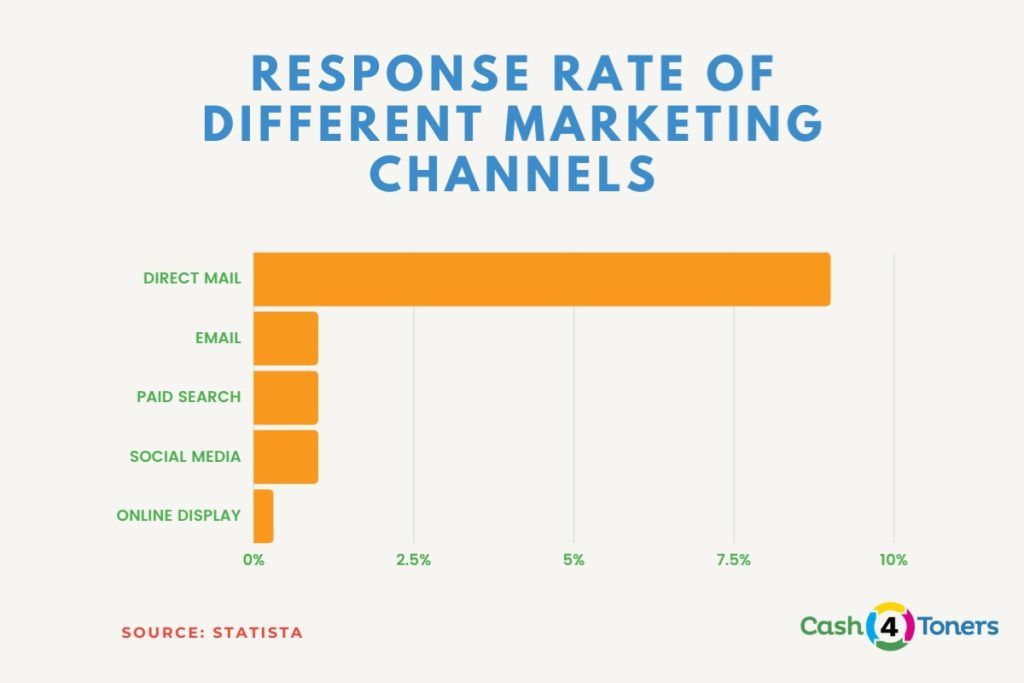
Print and Direct Mail Statistics for 2026
- USPS Marketing Mail generated $15.7 billion in revenue in FY 2025, up from $15.4 billion in FY 2024.
- USPS delivered 56.8 billion Marketing Mail pieces in FY 2025, compared with 57.5 billion in FY 2024 and 59.4 billion in FY 2023.
- Marketing Mail represented more than half of all USPS pieces in FY 2025: 56.8 billion Marketing Mail pieces out of 108.7 billion total USPS pieces.
- ANA's 2023 response benchmark found direct mail to house lists had a 15.6% response rate and 160.9% ROI. Direct mail to prospect lists had a 10.8% response rate and 33.7% ROI in that study.
- 82% of marketers who tracked direct mail response used online tracking, including QR codes, specific URLs, or similar mechanisms, according to ANA.
- 73% of direct-mail marketers in ANA's benchmark relied on response rate as a key metric, while 55% relied on ROI.
- 87% of senior marketing and operations leaders surveyed by Lob said printing, shipping, and delivery are major blind spots; 82% said those blind spots create surprise costs.
- 85% of Gen Z and Millennial consumers surveyed by Lob engage with direct mail, and 67% said they had taken action as a result.
- Digital advertising remains much larger and more crowded. IAB reported U.S. internet advertising revenue reached $294.6 billion in 2025, up 13.9% year over year.
Does Direct Mail Still Work?
Yes, but not because every printed piece magically performs. Direct mail works when the audience, offer, timing, format, and follow-up are strong. It works best when the campaign has a specific job: win back customers, drive a local visit, introduce a high-consideration product, support a catalog offer, or push a prospect to a landing page.
The strongest lesson from current response-rate data is that house lists matter. ANA's benchmark showed a much stronger ROI for direct mail sent to existing customer lists than for prospect lists. That does not mean cold direct mail cannot work. It means list quality, segmentation, and offer fit have a huge effect on results.
- Use house lists for ROI: existing customers are more likely to recognize the brand, understand the offer, and respond.
- Use prospect lists carefully: match geography, buying intent, household profile, and timing before spending on print.
- Track every campaign: QR codes, landing pages, promo codes, call tracking, and matchback analysis help connect offline response to online behavior.
- Measure more than response rate: response rate is useful, but cost per response, cost per acquisition, conversion rate, and lifetime value tell you whether the campaign is profitable.
Print Makes an Impression
Digital advertising is fast, flexible, and easy to test. It is also crowded. Direct mail gives marketers a different kind of attention: the customer physically handles the message, sees the creative at home, and can return to it later.
Lob's 2025 consumer research is a useful reminder that direct mail is not just an older-audience channel. In its survey of 2,000 U.S. consumers, 85% of Gen Z and Millennials said they engage with direct mail, and 67% said they had taken action because of it.
That does not mean younger consumers want generic mail. The same lesson applies across age groups: relevance, personalization, and a clear next step matter more than the fact that the piece is printed.
- Postcards are useful for simple offers, local promotions, reminders, and quick calls to action.
- Letters work better when trust, explanation, or a formal tone matters.
- Catalogs still make sense for product discovery, repeat buying, and high-average-order categories.
- Dimensional mail can stand out in B2B or account-based marketing, but only when the account value justifies the cost.
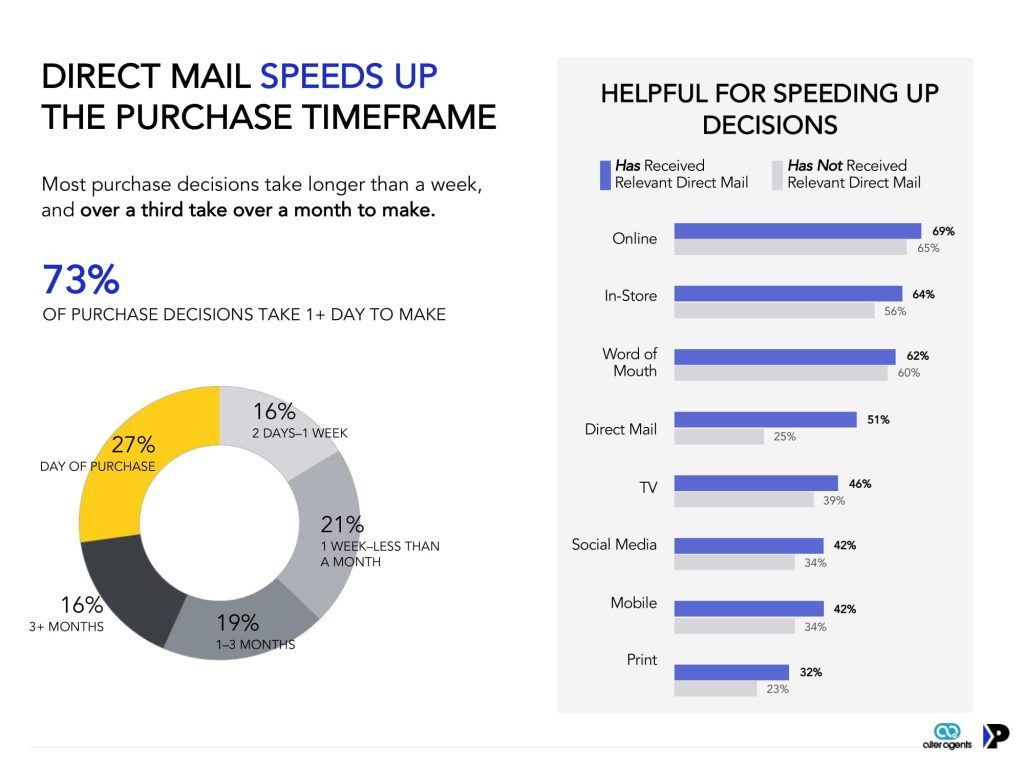
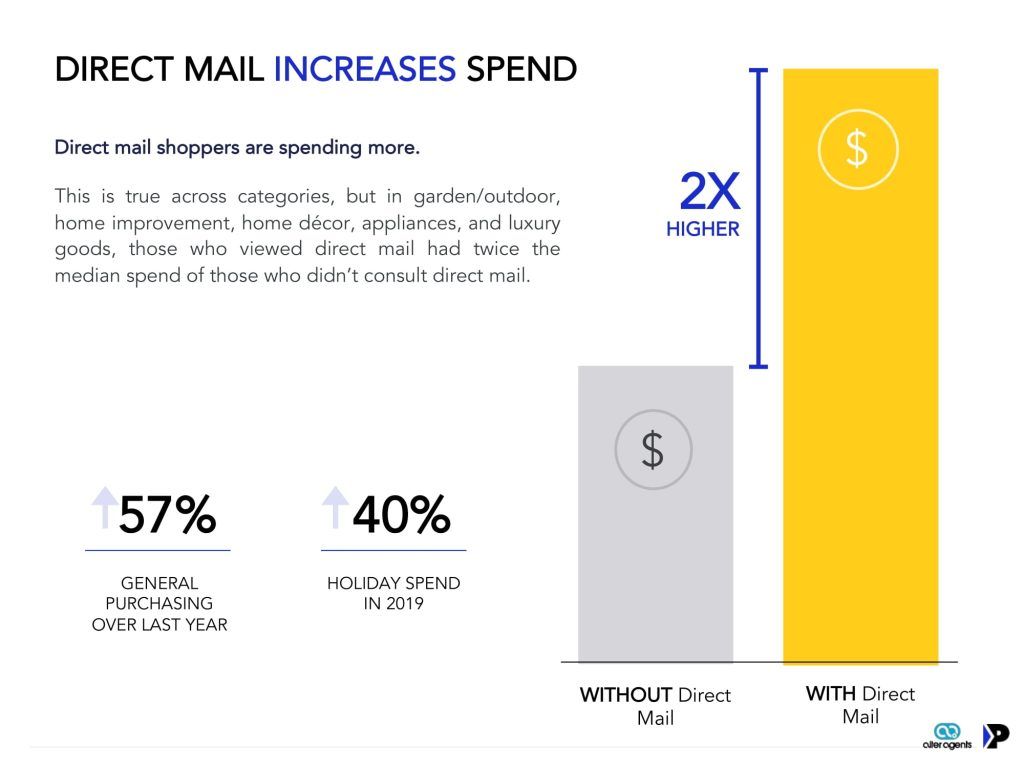
Print Media Trends to Watch
Print is not one channel. A coupon postcard, a catalog, a newspaper insert, a trade magazine ad, and a handwritten-style acquisition letter all behave differently. For 2026, the important trend is not "print versus digital." It is which print format supports the buying journey better than another digital touchpoint would.
USPS OIG notes that electronic alternatives have reduced demand for mail over time, and that direct-mail advertising's share of total advertising media spending fell by roughly half between 2013 and 2023. At the same time, USPS still handled tens of billions of Marketing Mail pieces in FY 2025. That combination explains the current market: print is smaller than it used to be, but it is still a serious performance channel for the right campaigns.
Newspapers and Local Print
Newspapers are no longer the mass-reach advertising engine they once were, but local print can still work when geography, timing, and trust are the main advantages. Local service businesses, community events, senior-focused offers, and neighborhood retail promotions may still benefit from local print placement or shared-mail campaigns.
Magazines, Trade Publications, and Catalogs
Magazines and trade publications can still be useful when audience quality is more important than audience size. The same is true for catalogs. ANA's 2023 benchmark found that postcards were the most common format for house lists, while letter-sized envelopes were most common for prospect lists. It also found catalog usage increased compared with the previous study, especially for prospect-list campaigns.
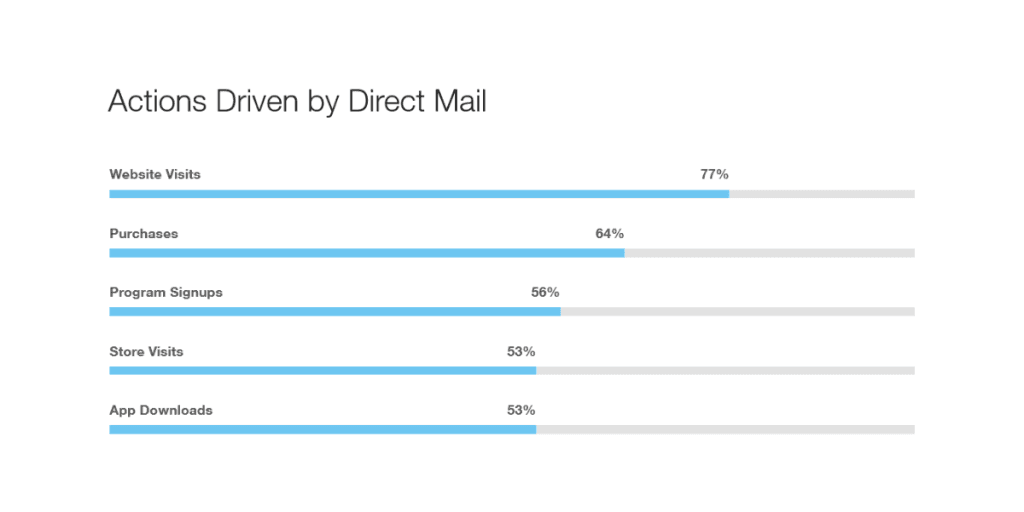
The Combined Power of Print and Digital
Direct mail should not be planned in isolation. The best campaigns treat the mailbox as one touch in a larger sequence: mail piece, landing page, email follow-up, retargeting, sales call, or store visit.
This is where print becomes more measurable. A QR code can send visitors to a dedicated landing page. A unique coupon can identify the campaign at checkout. A personalized URL can connect each response to a segment. Call tracking can separate phone responses from other leads. Matchback analysis can show whether mailed households later bought online.
- Use direct mail before digital follow-up when you need awareness, trust, or physical presence.
- Use direct mail after digital engagement when a customer has shown intent but has not converted.
- Use direct mail with email when you need both physical recall and fast reminders.
- Use direct mail with retargeting when the campaign has enough volume and margin to justify multiple touches.
How Effective Is Direct Mail Marketing in 2026?
Direct mail is effective when it is treated as a performance channel, not just a print expense. The numbers worth watching are not only how many people respond, but how many become customers and whether the campaign pays back.
For 2026 planning, use these benchmarks as a starting point:
- Volume: USPS Marketing Mail is still massive, with 56.8 billion pieces in FY 2025.
- Revenue: USPS Marketing Mail revenue increased to $15.7 billion in FY 2025, even as pieces declined.
- Response tracking: ANA found 82% of direct-mail marketers who track response use online tracking such as QR codes or campaign URLs.
- List quality: ANA's benchmark showed direct mail to house lists produced much higher ROI than direct mail to prospect lists.
- Consumer engagement: Lob found strong Gen Z and Millennial engagement with direct mail in its 2025 consumer study.
The bottom line: direct mail is not dead. It is more selective. In 2026, the winning campaigns are targeted, measurable, and connected to digital follow-up.
Further reading:
- Print Is Not Dead: Why Print Still Matters
- Does Printer Ink Expire?
- Printer Maintenance Tips
- How to Print Stickers
Sources
USPS FY 2025 Annual Report to Congress
USPS OIG: Projecting Mail Volume: Future Trends and Implications for the Postal Service
ANA Response Rate Report 2023 PDF
Lob State of Direct Mail 2026: Business Insights Edition
Lob State of Direct Mail 2025: Consumer Insights
IAB/PwC Internet Advertising Revenue Report: Full Year 2025
Statista: U.S. response rate of selected media in digital marketing
Shopping Shift direct mail summary
USPS Delivers: How marketers use direct mail
0 comments
No comments yet.